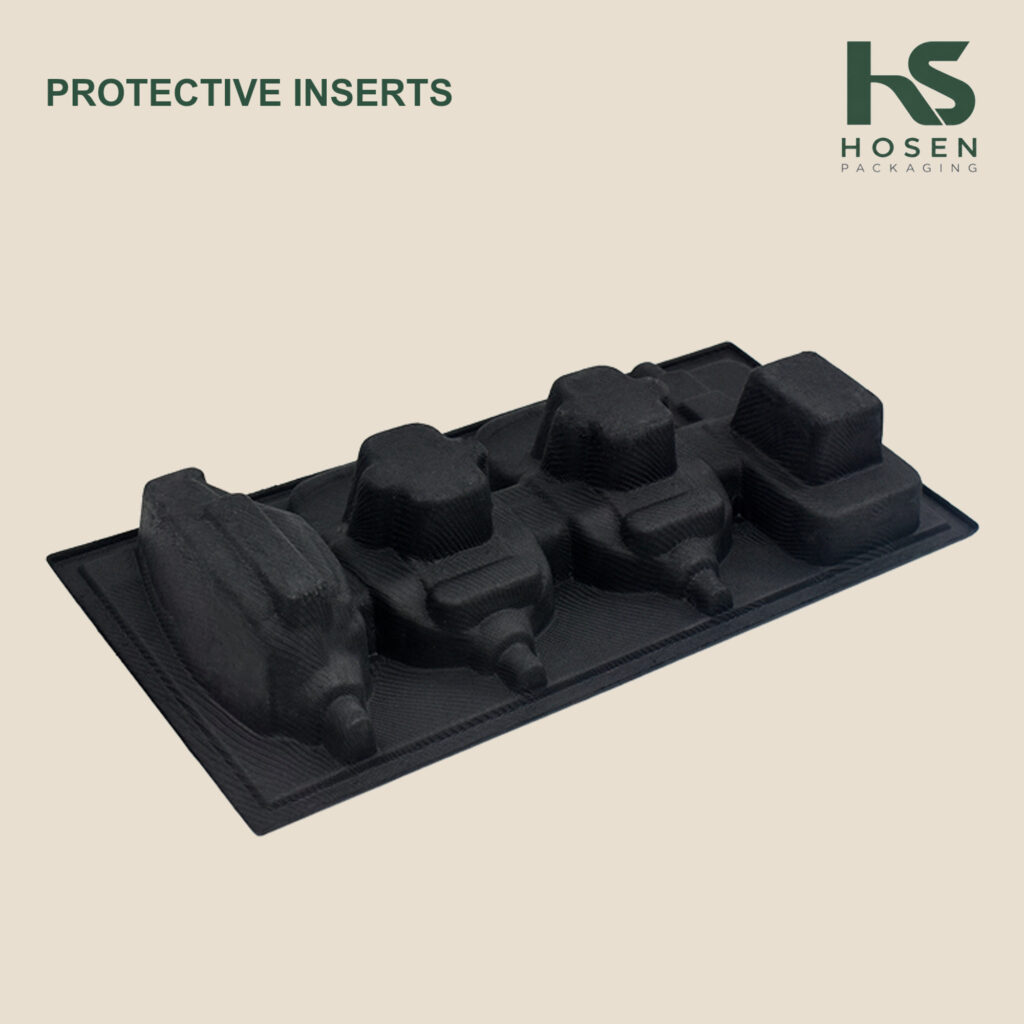
Protection engineering
We look at the product, the outer carton and the distribution route together. A molded pulp insert only performs as intended when the whole packed unit is considered.
| Variable | Structural response | How it is checked |
|---|---|---|
| Product weight | Support ribs and distributed contact areas | Loaded fit review with the complete pack |
| Fragile zones | Defined clearance around vulnerable edges and surfaces | Drawings plus a marked-up product sample |
| Movement in transit | Positioning features that limit shift and product-to-product contact | Packed-unit handling and agreed transport tests |
| Stacking & warehouse load | Wall thickness and rib geometry | Stacking requirement agreed in the brief |
| Distribution environment | Fibre and finishing route selected against conditions | Destination country and route shared at briefing |
| Outer carton | Insert footprint matched to internal carton dimensions | Carton specification supplied with the enquiry |
Support is placed where the product can take load, with clearance kept where it cannot.
Drop, vibration and transit test plans can be agreed for a project. The insert is assessed as part of the complete packed unit.
Third-party SGS reports and material declarations are available; the applicable scope is confirmed against your market. See documentation →
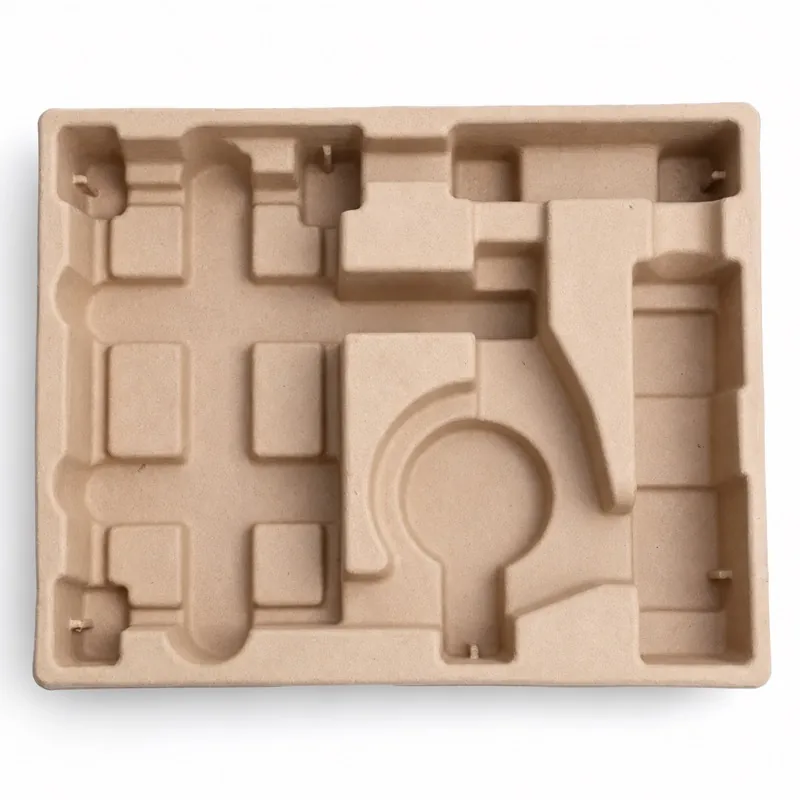
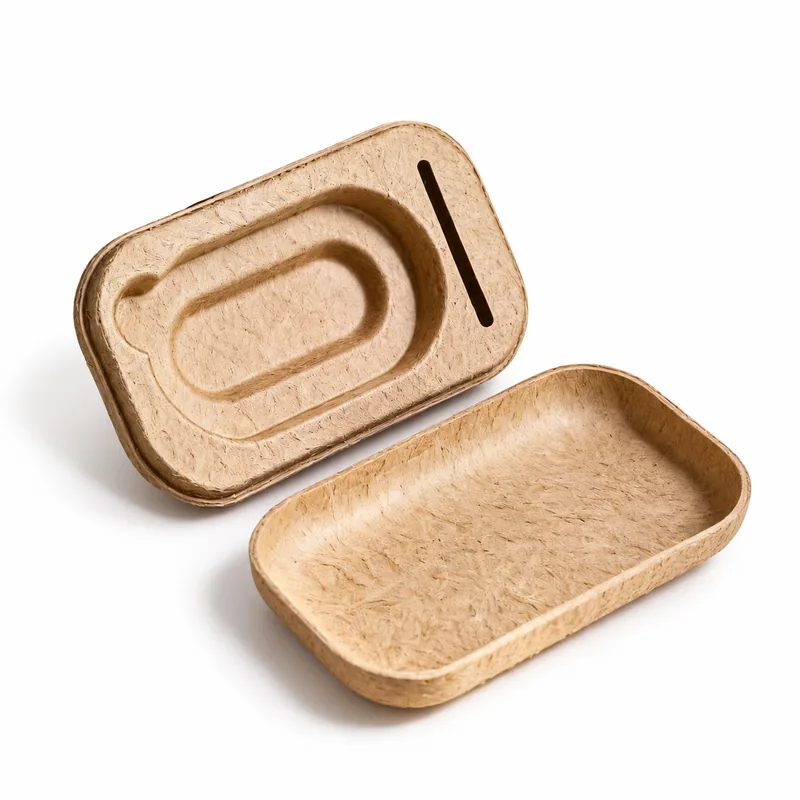
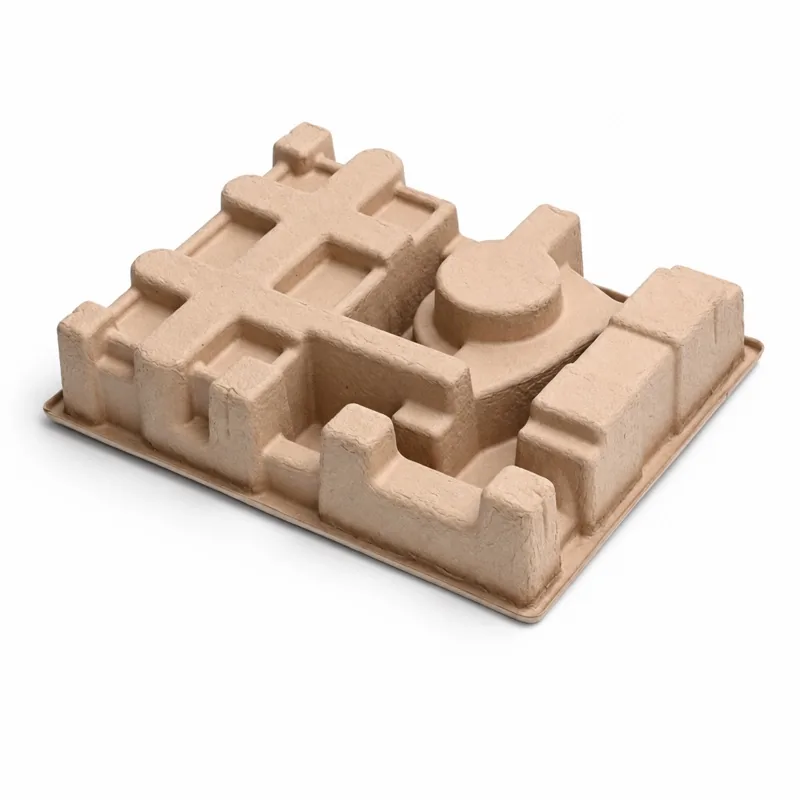
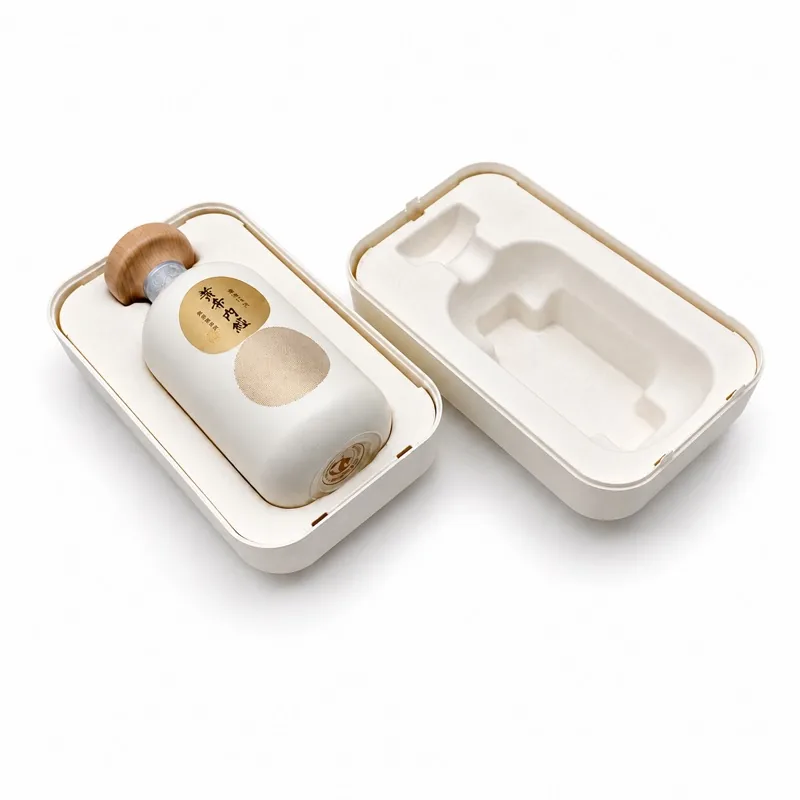
Performance claims are only made after a project-specific test plan and an approved sample. Reference imagery shows structure and finish, not a certified protection rating.
Project starting specifications
These are starting points for discussion, not a catalogue of stocked items. Final values are agreed against your drawings and the approved physical sample before production.
| Parameter | Starting point | How it is confirmed |
|---|---|---|
| Order quantity | 3,000 pcs minimum | Confirmed in the quotation, together with repeat demand |
| Sampling | Approximately 15 days | Schedule confirmed per project after scope and drawings are agreed |
| Forming tool envelope | Up to 600 × 800 mm | Reviewed for drainage, release and draft during design |
| Wall thickness · dry press | ~1.8–2.0 mm | Measured on the approved sample |
| Wall thickness · wet press | ~0.8–1.0 mm | Measured on the approved sample |
| Fibre options | Bagasse (light), bamboo (natural), recycled paper (kraft tone, dry press only) | Selected against appearance, strength and budget |
| Colour | Natural or white as standard; Pantone U matching on request (target ΔE ≤ 3) | Approved against a physical sample, not a screen proof |
| Brand detail | UV print, hot foil, screen print, or embossed / debossed detail formed in the tool | Confirmed with artwork and a physical sample |
| Dimensions & tolerances | Custom to the product and the outer packaging | Agreed on drawings and the approved sample |
| Protection performance | Evaluated with the complete packed product | Project-specific test plan agreed at quotation stage |
A light-coloured, relatively smooth surface that suits presentation-led trays and boxes where a clean, pale finish matters.
A warm, natural fibre appearance for projects that want the material to read as part of the design rather than be hidden.
A kraft-toned option used with dry pressing. Chosen for protective structures where surface refinement is less critical than material cost.
Fibre, coatings, inks and any added components all affect the finished pack. We confirm the material route against your destination market and the documentation your purchasing team requires.
Questions buyers ask
No. Every tray, insert and box is developed around a specific product and its outer packaging. The structures shown on this site are references for geometry and finish, not items available from stock.
The starting minimum is 3,000 pieces per project. Tell us your expected repeat demand as well, because it affects how we plan tooling and production.
Typically around 15 days once the brief, drawings and scope are agreed. The exact schedule is confirmed per project before we start.
Natural and white are standard; Pantone U matching is available on request with a target tolerance of ΔE ≤ 3. Brand detail can be applied by UV print, hot foil, screen print, or an embossed / debossed detail formed into the tool. Colour and finish are approved on a physical sample rather than a screen proof.
Dry pressing gives a textured surface and roughly 1.8–2.0 mm walls; wet pressing gives a smoother face, finer detail and roughly 0.8–1.0 mm walls. We recommend a route after reviewing product geometry, appearance, protection needs and tooling budget.
Six SGS test reports and our German Packaging Act (VerpackG) EPR registration can be downloaded from this site. Each document states its own scope and test method. Send us your destination market and we will confirm which documentation applies to your project.
Product dimensions and weight, drawings or photographs, the component list, fragile or cosmetic surfaces, target quantity, destination country, and any appearance or testing requirements. Our packaging brief guide walks through the full list.
Start a project
Share dimensions, weight, target quantity, destination country and any finish or protection requirements. We will reply with structure options, a material recommendation and a tooling quotation — not a generic catalogue.
Request a Quote Chat on WhatsAppWhatsApp +86 138 2727 8437 · chris@hosenpackaging.com · Dongguan, Guangdong, China