Production & quality
An approved sample is the reference for production. We agree the acceptance criteria in writing before volume starts, so fit, appearance and packing can be judged against the same standard.
| Check | Reference | How it is recorded |
|---|---|---|
| Product fit & retention | Approved sample and product drawings | Fit review with the actual product or agreed dummy |
| Dimensions & wall | Agreed dimensional specification | Measured on samples from the production run |
| Colour & surface | Approved physical sample, not a screen proof | Visual reference held against the approved sample |
| Formed / printed detail | Approved artwork and tool detail | Position and legibility check on the formed part |
| Critical clearances | Defined contact points and fragile zones | Reviewed with the complete packed unit |
| Packing & stacking | Agreed carton, nesting and stacking requirements | Packing method confirmed before dispatch |
| Project-specific testing | Test plan agreed at quotation stage | Third-party report where a project requires it |
Drainage, release and draft are reviewed before the structure is cut into a tool, because they decide what can be formed consistently.
Forming and drying routes determine texture, detail and dimensional consistency. Dry and wet press are compared below.
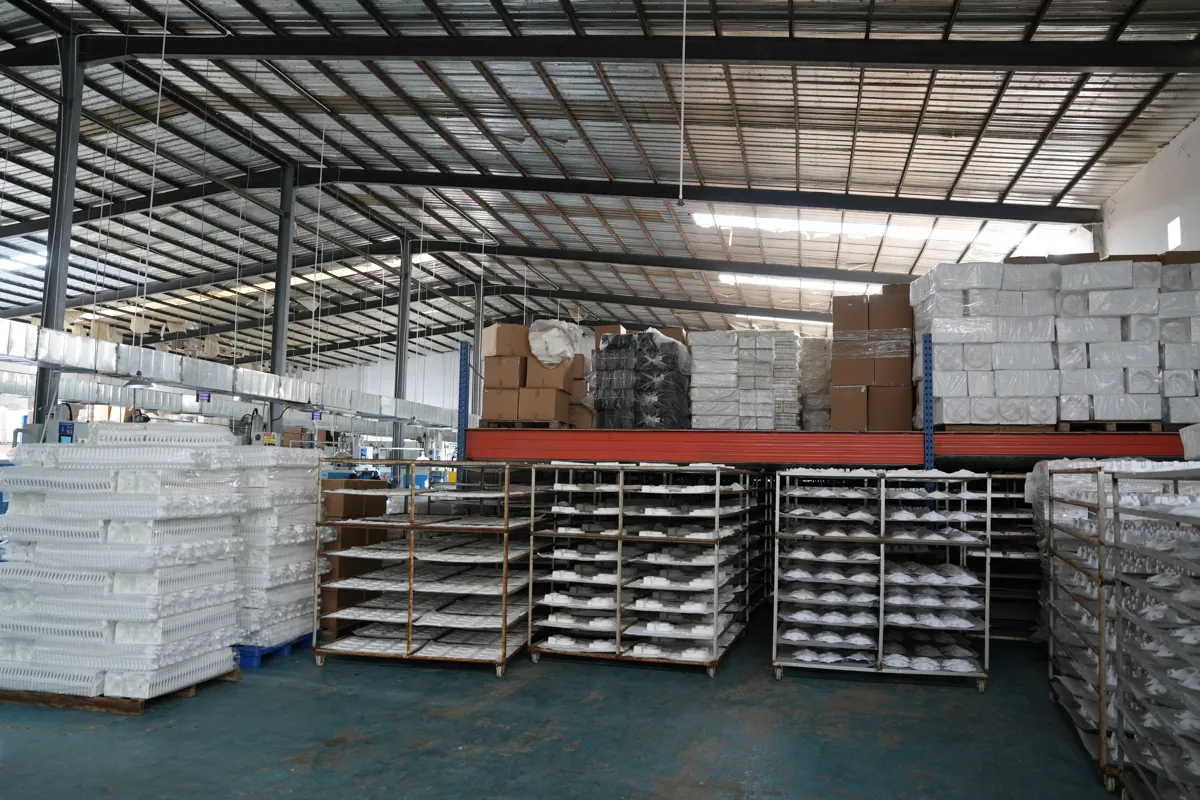
Fit, appearance and packing are checked by people as well as against the written specification. See the production photographs below.
Inside our facility
Forming lines, hot-press and trimming stations, manual inspection and finished-goods storage. Every photograph below was taken at our own Dongguan facility — no stock imagery and no borrowed factory shots.
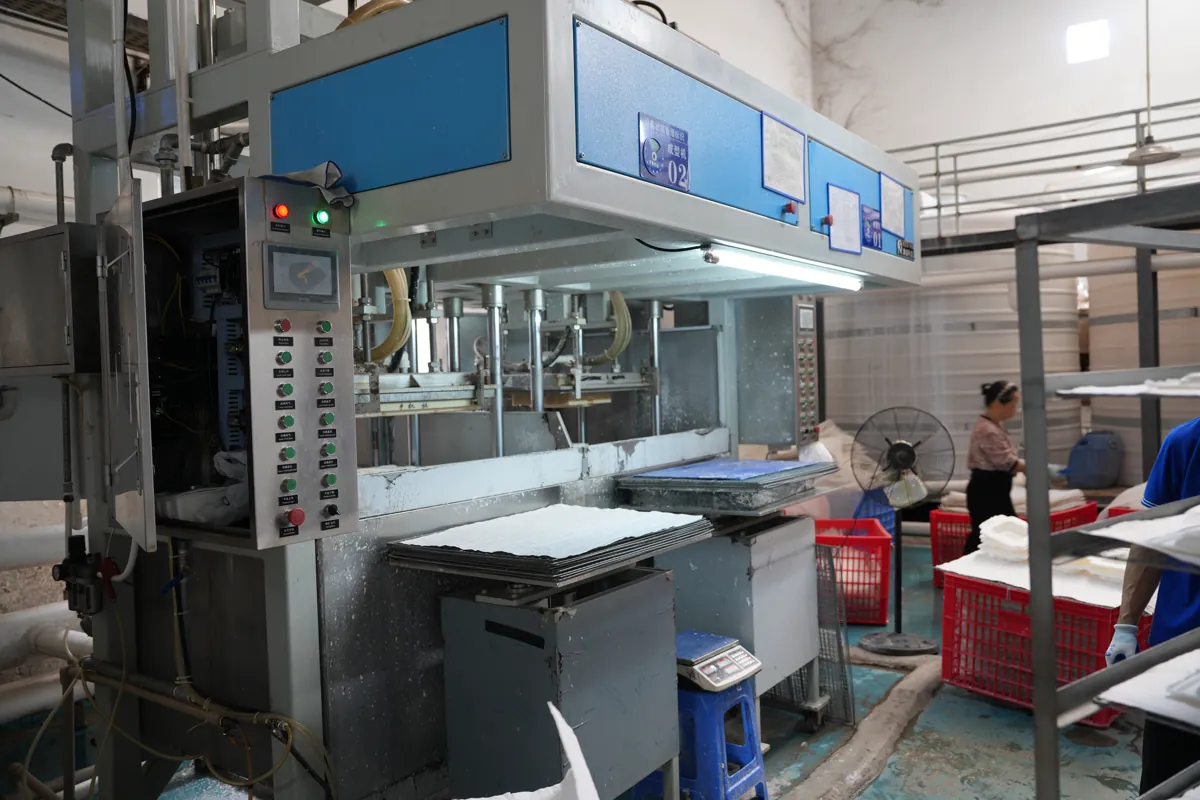
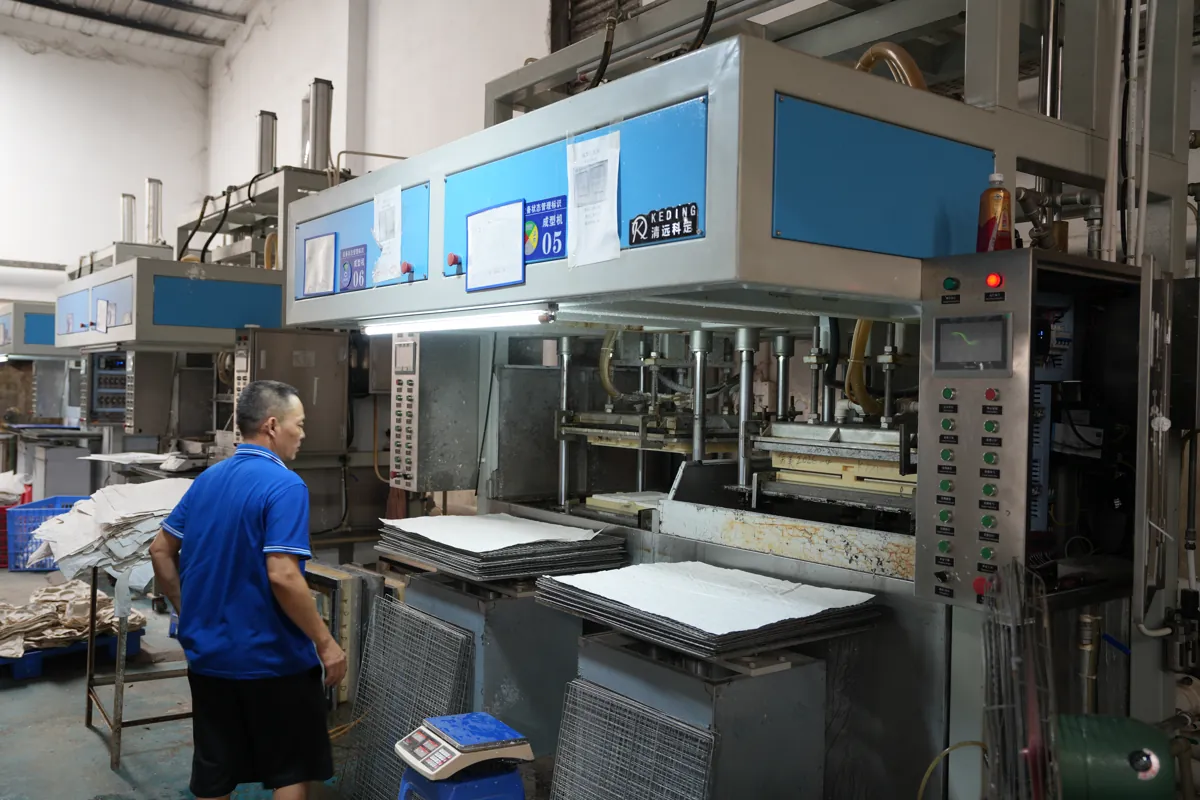
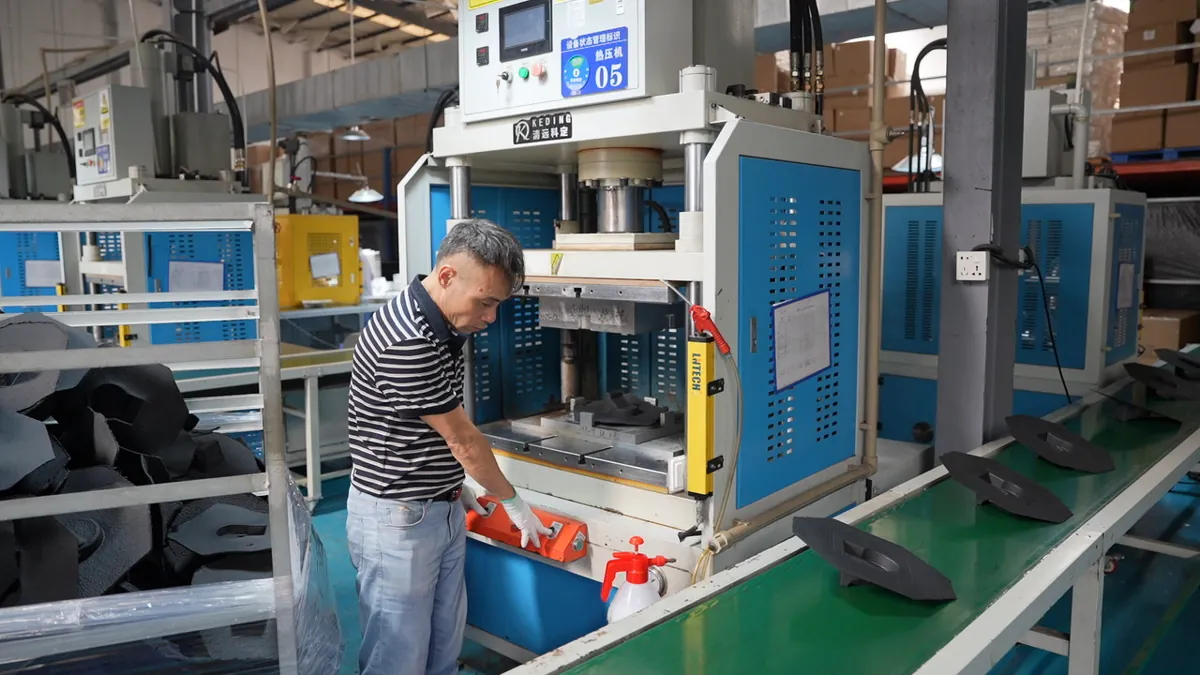
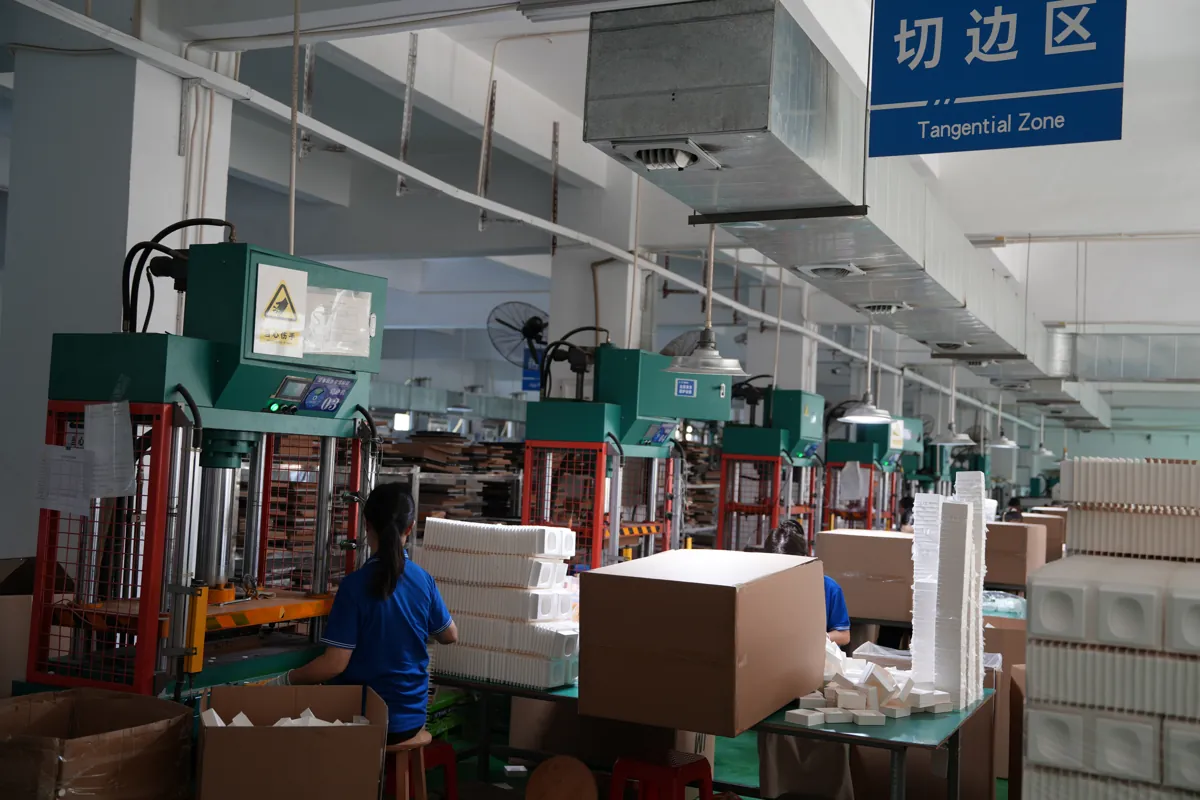
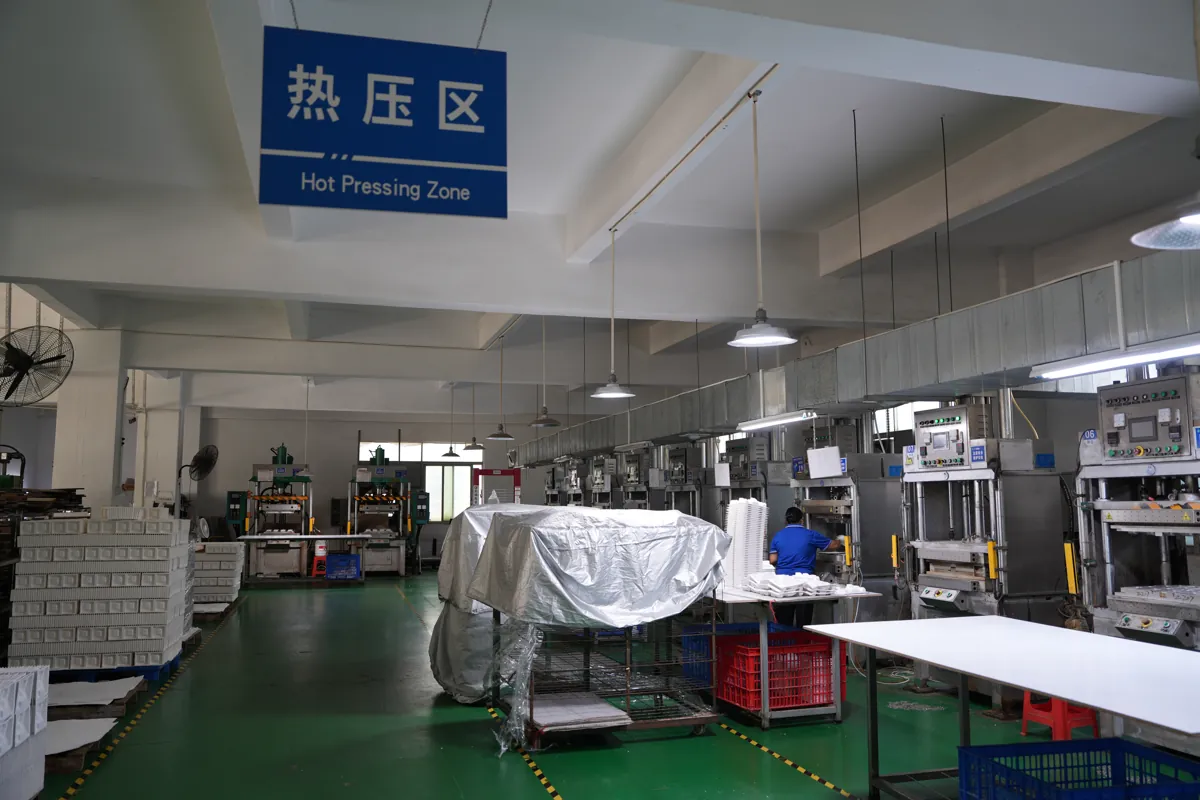
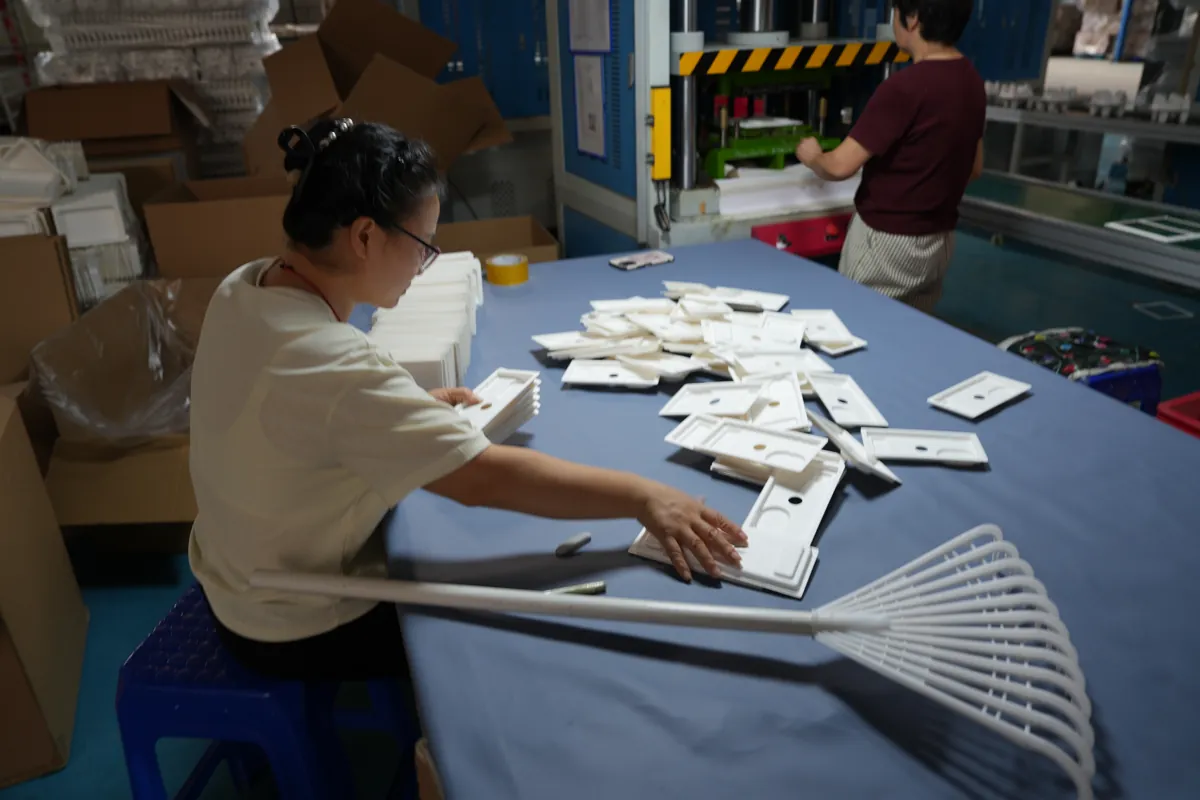
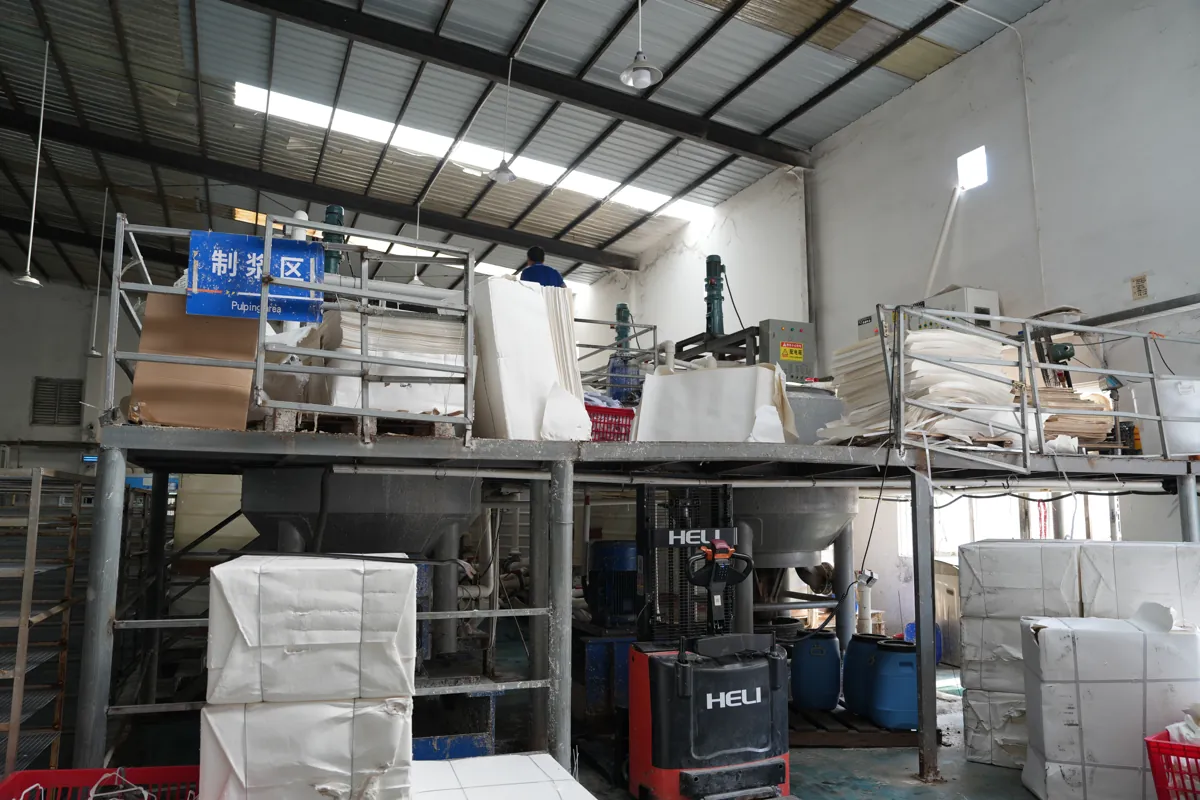
Our company film shows the forming lines, finishing stations and warehouse in one continuous take. Watch the factory film →
Questions buyers ask
No. Every tray, insert and box is developed around a specific product and its outer packaging. The structures shown on this site are references for geometry and finish, not items available from stock.
The starting minimum is 3,000 pieces per project. Tell us your expected repeat demand as well, because it affects how we plan tooling and production.
Typically around 15 days once the brief, drawings and scope are agreed. The exact schedule is confirmed per project before we start.
Natural and white are standard; Pantone U matching is available on request with a target tolerance of ΔE ≤ 3. Brand detail can be applied by UV print, hot foil, screen print, or an embossed / debossed detail formed into the tool. Colour and finish are approved on a physical sample rather than a screen proof.
Dry pressing gives a textured surface and roughly 1.8–2.0 mm walls; wet pressing gives a smoother face, finer detail and roughly 0.8–1.0 mm walls. We recommend a route after reviewing product geometry, appearance, protection needs and tooling budget.
Six SGS test reports and our German Packaging Act (VerpackG) EPR registration can be downloaded from this site. Each document states its own scope and test method. Send us your destination market and we will confirm which documentation applies to your project.
Product dimensions and weight, drawings or photographs, the component list, fragile or cosmetic surfaces, target quantity, destination country, and any appearance or testing requirements. Our packaging brief guide walks through the full list.
Start a project
Share dimensions, weight, target quantity, destination country and any finish or protection requirements. We will reply with structure options, a material recommendation and a tooling quotation — not a generic catalogue.
Request a Quote Chat on WhatsAppWhatsApp +86 138 2727 8437 · chris@hosenpackaging.com · Dongguan, Guangdong, China